
A method built for distance
My work is not organised as a service stack or a sequence of tasks.
It is structured as a decision framework designed to operate under distance, complexity, and asymmetry.
Renovation projects do not fail because of a lack of expertise.
They fail because decisions are taken with partial information, under pressure, or without a clear client-side structure.
My role is to prevent that drift.
This page describes how decisions are framed and secured, not a chronological list of tasks.
It defines the logic that guides my involvement, regardless of the project phase or level of complexity.
Assessment
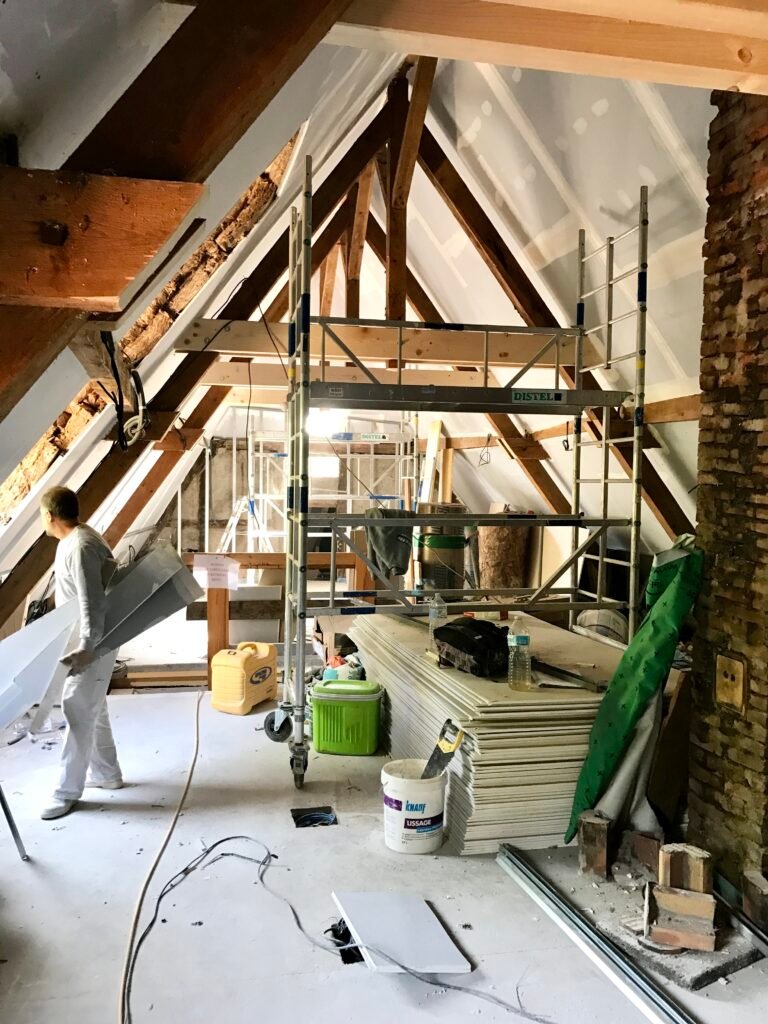
Every project starts with a clear assessment phase.
Feasibility, constraints, regulatory exposure, technical limits, and risk are analysed before any major commitment is made.
This phase is designed to answer one question only:
what can be decided safely from abroad — and what cannot.
For international property owners, this step is essential to avoid premature commitments — contractual, financial, or technical — made without full local visibility.
Structuring decisions
Once feasibility is established, the project is structured from the client’s perspective.
Priorities are clarified.
Options are framed.
Trade-offs are made explicit.
Nothing is left implicit or assumed.
This structure allows decisions to be taken deliberately, with full context, even when the client is not physically present in Paris.
This decision framework remains consistent throughout the project, while its application adapts to the project’s stage, constraints and level of risk.
Client-side Representation
I act as a single, independent local representative, exclusively on the client’s side.
I do not replace architects, designers, or contractors.
I do not execute work, sell services, or substitute myself for any contractual party.
My role is to ensure that instructions reflect the client’s intent, that commitments are checked against what was agreed, and that deviations are identified early — not normalised after the fact.
This method defines how decisions are taken, validated and maintained over time, ensuring that the project evolves without drifting away from the client’s original intent.
What this method achieves
This way of working is not about speed or optimisation at all costs.
It is about coherence over time.
About protecting intent against erosion.
About ensuring that distance does not silently redefine the project.
Who this approach is for
This approach is designed for non-resident property owners and international clients who value structure over improvisation, and clarity over speed.
It is particularly suited to projects where decisions carry long-term financial and personal consequences.